
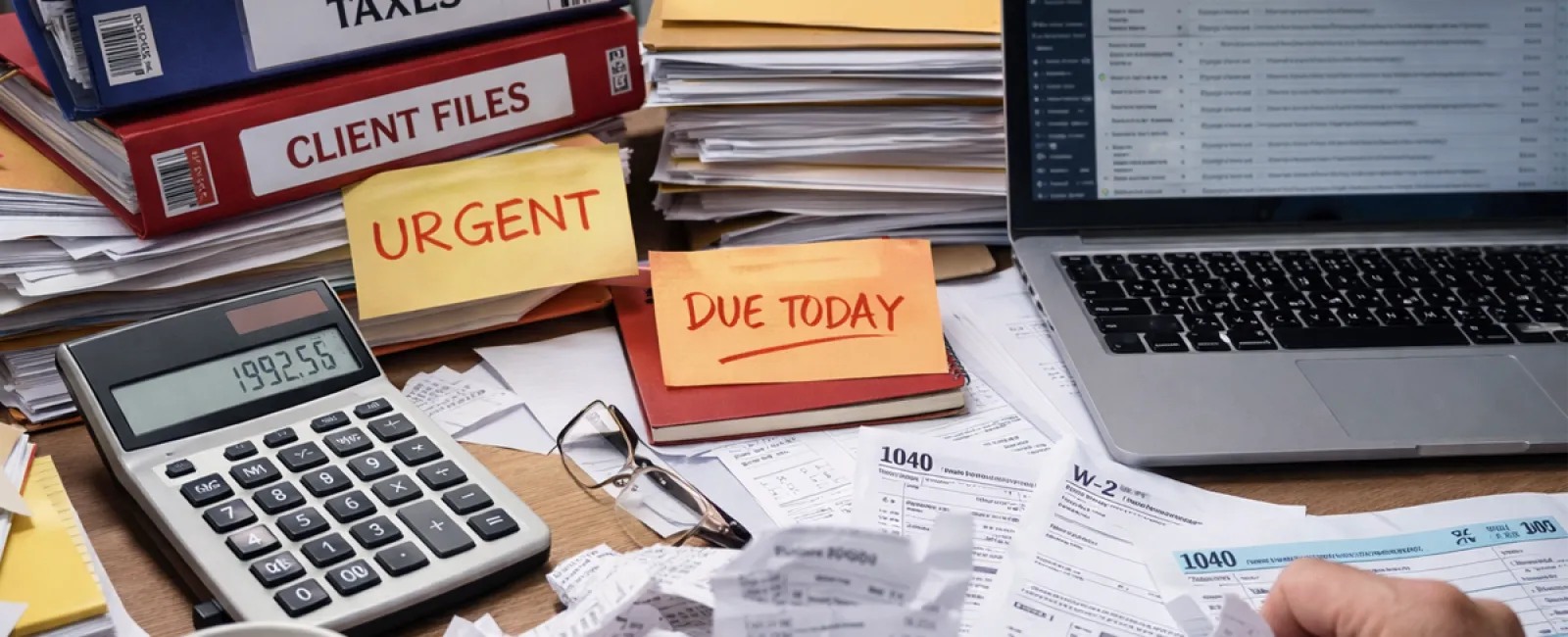
It's March.
Your accounting team is overwhelmed, your bookkeeping is frantically trying to keep pace, and looming deadlines are creating pressure. Meanwhile, emails flood into inboxes faster than anyone can manage.
Everyone is heads-down, pushing to survive this intense season.
This scenario is familiar to you.
But hackers are equally aware.
Security experts report a noticeable surge in phishing attacks during tax season, with March experiencing nearly a 28% rise in tax-related scam emails compared to other times of the year. These scams are subtle, crafted to mimic routine business communications right when everyone is busiest.
This is no accident.
This is strategic timing.
Here's what to expect—and four effective strategies to protect your business from becoming an easy victim.
The Overwhelmed Supply Chain
Many overlook this fact:
Hackers don't solely focus on accounting firms.
They exploit the disorder surrounding tax season.
During this peak period:
- Clients hurriedly send sensitive data
- Staff shortcuts essential verification steps to manage volume
- Requests like "Just send the file" replace cautious protocols
- Verification processes get skipped because everyone is overloaded
The entire workflow accelerates.
And in that speed lies vulnerability.
Hackers target busy, hectic businesses—not those operating calmly and methodically.
March is precisely that busy.
What These Cyber Attacks Really Look Like
This isn't fiction.
The scam email appears indistinguishable from your usual messages.
- An email from "your accountant" asking to resend W-2s due to transmission issues
- A vendor notification about changed bank details needing an update
- A DocuSign request demanding immediate signature on a tax document
- An urgent plea from "your CEO" traveling and requiring immediate assistance
These emails don't raise alarms.
They resemble everyday business in March.
That's why they are so effective.
Why Busy Professionals Fall Victim
This isn't due to negligence.
It's human nature.
When your inbox is flooded and deadlines press, you scan rather than read carefully. You make assumptions and respond quickly.
Scammers design their tactics for this exact hurried mindset.
Their emails exploit those moving at a rapid pace, missing subtle yet crucial warning signs. They don't need recklessness—just busy schedules.
And in March, everyone is busy.
Four Proven Ways to Avoid Becoming a Target
Good news: you don't need complex software or security experts to cut your risk.
Simple, deliberate habits during busy times make all the difference.
1. Confirm payment changes with a phone call
If you receive an email about updated vendor banking information, don't reply directly.
Use a trusted phone number to call and verify the change verbally.
This routine is one of the strongest defenses against costly fraud.
2. Pause on urgent requests for confidential info
Urgency signals should prompt caution, not haste.
If asked to send W-2s, tax or financial documents "immediately," take time to confirm first.
Legitimate senders welcome a brief pause; scammers won't.
3. Double-check urgent requests through another channel
Verify urgent emails with a quick call, text, or internal message.
A two-minute confirmation can stop a costly mistake.
True urgency withstands verification; fake urgency disappears.
4. Alert your team about the scam risk
Remind your staff that tax season is peak scam time.
Encourage slowing down, double-checking, and asking questions if anything feels off.
This simple shift can save time and prevent headaches later.
Key Insight
Tax season is challenging enough—don't add a security breach to the stress.
These attacks aren't sophisticated, just perfectly timed.
They count on rushed decisions.
They rely on assumptions.
They exploit the collective push to power through March.
A full system overhaul isn't necessary to stay safe.
Just slow down when it counts and always verify urgent requests.
That's often all it takes.
Busy-Season Security Self-Check
Your company may already have solid security habits—and if so, that's fantastic.
However, if tax season tends to force reactive decisions or if you're unsure how your team handles urgent requests, consider a quick assessment with a free 15-Minute Discovery Call.
No hype or pressure—just a clear evaluation of whether simple habits could stop major issues this busy season.
If this message doesn't apply to your business, please forward it to someone who would benefit.
Click here or give us a call at 252-240-3399 to schedule your free 15-Minute Discovery Call.


