Sales Inquiries: (252) 659-4907
Existing Clients: (252) 648-0844
IT Services That Take Care of Everything IT-Related for You
“The single biggest benefit to Bluewater Supply since moving to managed antivirus is knowing that our system is protected, and protection is updated on a constant basis. Having the latest ...”

Tripp Nelson
Owner - Bluewater Supply
“The single biggest benefit to Primus Contracting since using ACS Computer Services is, I now have Peace of Mind. Better than any IT firm we have used is they make themselves readily available...”

David Thompson
President - Primus Structures
“I took my computer in today for these pop up ads I could not get rid of. The gentlemen looked at my computer, starting making some adjustments and had it fixed in minutes. H would not take a ...”

DONALD SKINNER
North Carolina
“Zach and Daniel answered all my questions and gave me the information I needed to move forward in updating the computer. They gave me an accurate estimate of the cost and had the ...”

BRENDA BRIGHT
North Carolina
“Identified the problem and even though one hard drive could not be recovered, they scanned and repaired one other, cloned the third drive and replaced the crashed one. Two days total time."

Glue Guy
North Carolina
Why Businesses Choose To Work with ACS
Here Since 1997
Nearly 30 years serving Carteret County means we know your market and the people who run it every single day.
Full-Service IT
Managed IT, cybersecurity, phones, Microsoft 365, wireless networking. One shop for all of it under one roof.
Expert-Led Team
Stefan has a master's in cybersecurity and has solved IT problems on the Crystal Coast since 1997 for local businesses.
A Name You Know
When something breaks, you need someone local who answers, shows up, and actually fixes it.
Your Tech Should Help You Run Your Business, Not Hold You Back
We're Here to Make Your IT An Undeniably Useful Tool in Your Daily Work.


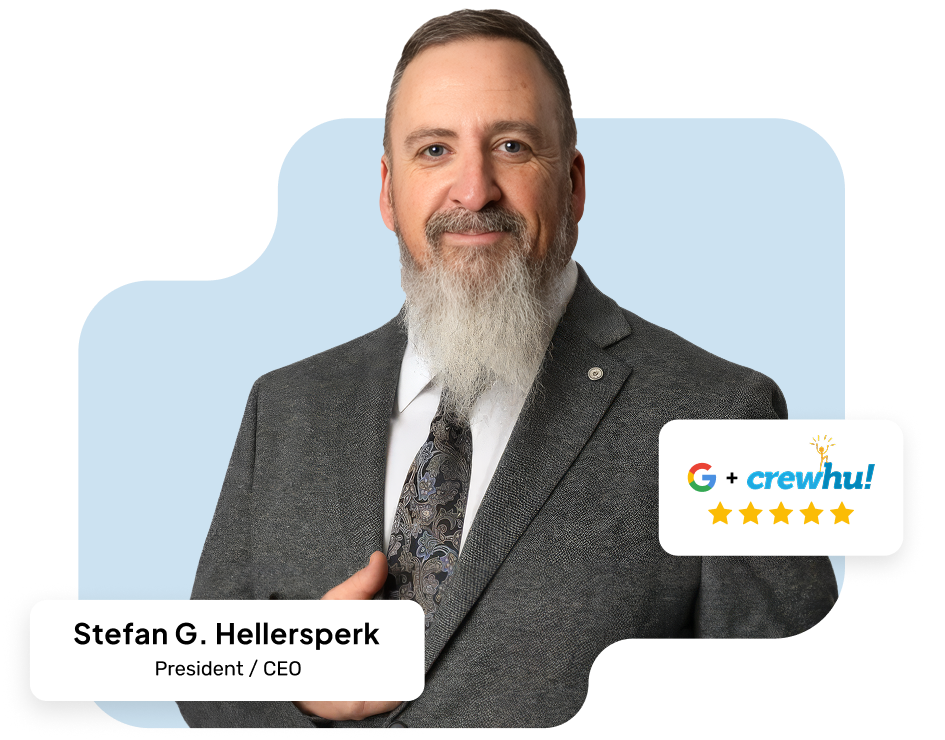
Stefan G. Hellersperk
President / CEO
When computers go down or the network drops, everyone in the office stops. For service-based businesses, that downtime doesn't just disappear. It costs real money.
Are you tired of unreliable IT slowing you down and putting you at risk?
Most businesses around here have been through it: something breaks, you call for help, and you wait. Sometimes days. Meanwhile the office sits still. And if you're like a lot of small businesses, you've got two or three different IT vendors who don't talk to each other. ACS Computer Services Inc. was built to fix that. Unreliable IT drains your business quietly. Every hour your team can't work is money out the door.
ACS Computer Services Inc. has been fixing these problems for Carteret County businesses since 1997. Give us a call: (252) 659-4907.
Schedule an Appointment Today
What We Do
Managed IT Services
We keep your computers, network, and software running so you don't have to think about any of it.
Cybersecurity
We protect your network, devices, and data from ransomware, phishing, and breaches before they hit.
Compliance
We help your business meet industry compliance requirements before an auditor shows up asking questions.
VoIP Phones
We set up and manage business phone systems that work whether your team is in the office or the field.
Microsoft 365 Support
We handle your Microsoft 365 licenses, setup, and day-to-day management so your team stays connected.
Wireless Networking
We build wireless networks with the coverage and reliability your business actually needs to run.
What Clients Say About Us
Reliable IT Support Through Every Crisis
“Highly responsive and available. Protecting our computers with managed security solutions keeps our employees productive instead of dealing with viruses. Installing and managing Office 365 increases productivity by having consistent versions of programs used every day. After our dealership was flooded out by Hurricane Florence ACS was instrumental in helping us rebuild and get operational in record time. Best computer service I have used in my 30 years in the automotive business.”

Rob Van Doren
Service and Parts Director - Lookout Ford, Morehead City NC
Responsive Support That Keeps Us Working
"ACS's remote support fixes our issues allowing us to continue working. Their expertise in multiple technologies is effective, they provide rapid resolution to issues. I love the remote support capability allowing them to quickly fix issues, even if they are my mistake, without making me feel bad about it. With over 18 years of great service, ACS takes care of everything so we can concentrate on our daily business without worrying about the security or operation of our hardware and software. If you are looking for a company, responsive to change and knowledgeable to provide value for planning technology in any business, call ACS.”

Neil Whitford
Attorney - Kirkman, Whitford, Brady, Berryman & Gordon, P.A.
Local Experts With A Long-Term Vision
“Since going to Office 365 at the recommendation of ACS, it has been great for training to have everyone on the same version of Office. We look forward to using all of the advantages that Office 365 has to offer.
I value being able to speak to a local live person when I have a question or concern. ACS is prompt in responding to my questions and concerns. I depend on their expertise and appreciate them considering not only what we need now, but also a plan going forward. If you want the excellent level of service we have, call Stefan today.”

Christi Wood
Finance Director - Town of Beaufort
Professional Support That Goes Above and Beyond
“Go. Here. First. Zachary just fixed my computer in less than half an hour and charged me a very reasonable amount for labor. But more than that - he did it right in front of me while keeping up a stream of witty banter and explaining everything he was doing in terms I could understand (no back room shadiness at this place; it is completely transparent). I could literally do this particular repair myself next time, because he taught me. This is what a truly good business looks like, folks. Could not recommend more highly.”

Clara Louise
North Carolina
Restoring Trust with Expert Computer Repair
“I did not and went to a computer place in Newport. After having my laptop for a month they lost all my files to include pictures of deceased loved ones and then lied to me about my laptop being fixed. I then came to ACS Computer Services for help and they fixed my laptop at a reasonable price and in a timely manner. They were even able to find out that the other computer shop had put another persons hard drive in my computer with their personal information on it. After ACS fixed my old laptop I purchased a new one from them as a Christmas gift at a great price. Trust me you'll be sorry if you don't do business here!!”

Lonnie Ward
North Carolina
The More You Know...
The ACS blog is where we write about IT in plain English. No technical jargon, no acronym soup. Just practical information to help you make smarter decisions about the technology your business runs on.

That ‘Old’ Tech? You’re Still Paying For It Every Month
Outdated technology is a lot like a shoe that's worn through: you can keep using it for a while.. ...more
IT Services
June 22, 2026•3 min read

How ‘We’ll Fix It Later’ Turns Into Summer Fire Drills
When IT is handled only after something goes wrong, it may seem manageable at first. ...more
IT Services
June 15, 2026•4 min read

The Longest Day of the Year and You’re Still Out of Time
Every year, the end of June gives us the longest day of the year—more daylight, more usable... ...more
IT Services
June 08, 2026•3 min read

Download Our Free IT Buyer’s Guide
Discover everything you need to know about choosing the right IT partner for your business. Our free IT Buyer's Guide outlines the key factors to consider when selecting IT services, helping you make an informed decision that saves you time, money, and stress.
Frequently Asked Questions
What does managed IT actually mean for my business, and how does it change the way my team works?
It means we handle the day-to-day upkeep of your computers, network, and software. You focus on your work, and we make sure the technology stays out of your way.
Do you work with businesses our size, or do you focus on larger companies?
We work with small businesses throughout Carteret, Onslow, and Craven counties. Most of our clients have fewer than 50 computers, and that is exactly who we built our services for.
How do we reach you when something breaks, and how fast will someone respond?
You call us directly at (252) 648-0844 and talk to a real person. No phone trees, no ticket system, no waiting three days for a callback.
Where exactly do you serve, and do you cover the surrounding counties?
We are based in Morehead City and cover businesses throughout the Crystal Coast and surrounding counties, including Onslow and Craven.
Headquarters
Ste A, Morehead City NC 28557
